
 Save to Pinterest
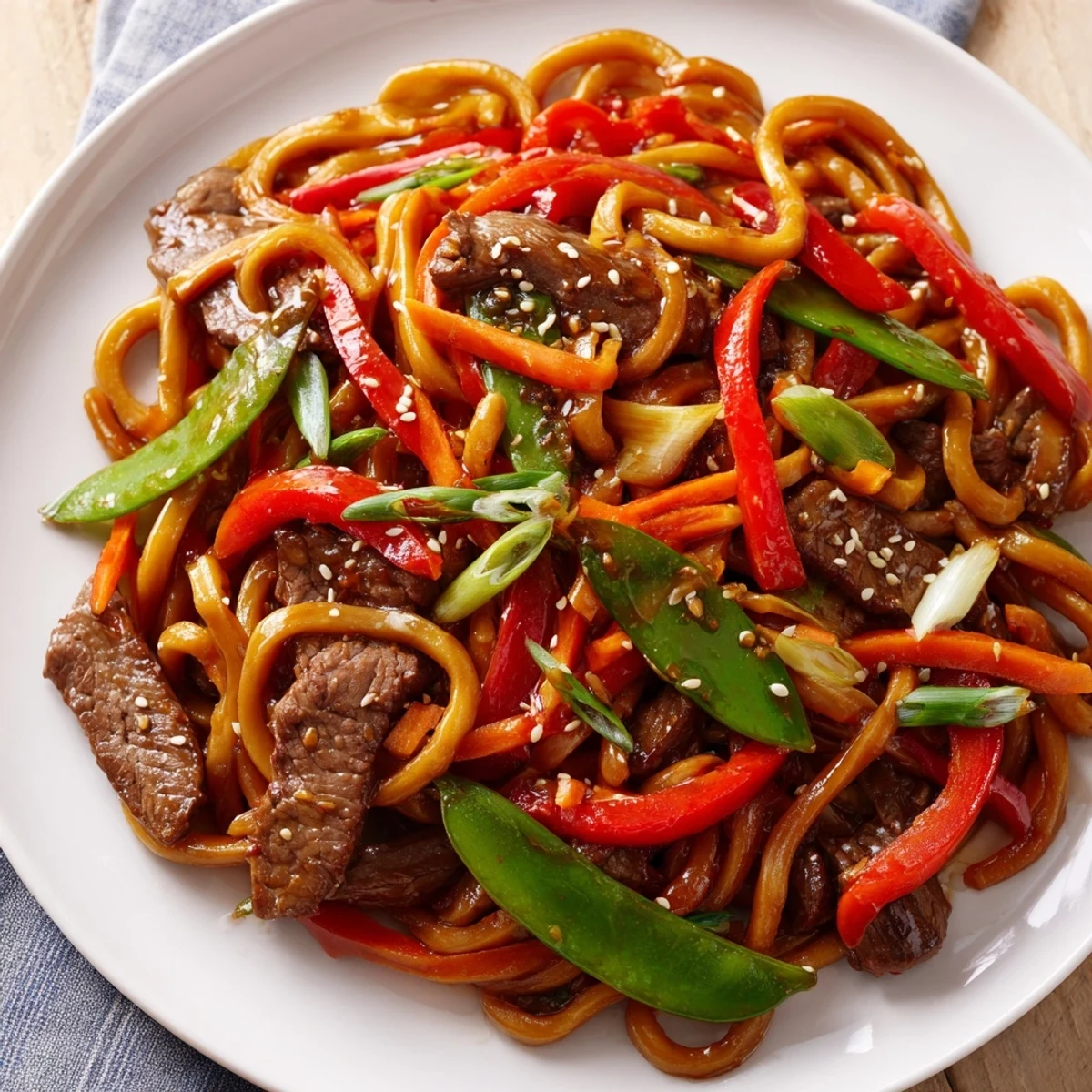
 This dish features thinly sliced sirloin beef marinated and quickly seared to retain tenderness. Fresh udon noodles provide a chewy texture that complements crisp bell peppers, sugar snap peas, and carrots stir-fried with garlic and ginger. The spicy sauce blends soy sauce, oyster sauce, sriracha, mirin, and brown sugar, creating a balanced, flavorful coating. Garnished with toasted sesame seeds and spring onions, this vibrant stir fry comes together in under 35 minutes for a satisfying, aromatic main dish.
The first time I made udon stir fry was at midnight on a random Tuesday, standing in a nearly empty kitchen with nothing but hunger and a wok. My friend had texted asking what I was cooking, and I sent back a photo of the finished bowl still steaming—golden beef, chewy noodles, sauce clinging to everything. That moment, watching their reply come back as just a string of fire emojis, I realized this dish was something special.
I made this for my roommate the night before they moved out, wanting to send them off with something warm and a little chaotic—the good kind of chaotic where the kitchen smells incredible and you're both hovering over the pan. They ate three bowls without saying much, which somehow meant everything.
Ingredients
- Sirloin steak, thinly sliced: Slice against the grain—this matters more than you'd think, making each bite tender rather than chewy in the wrong way.
- Cornstarch: This is your secret to beef that stays slightly velvety instead of tough; it's a technique borrowed from Chinese cooking that actually works.
- Fresh udon noodles: These are chewy and thick, absorbing sauce better than thin noodles ever could—frozen works fine if fresh isn't around.
- Red bell pepper and carrot: Choose ones that feel firm; soft vegetables will turn mushy by the time everything comes together.
- Sriracha or chili garlic sauce: This is where your spice lives, so taste as you go rather than adding it all at once.
- Soy sauce, oyster sauce, mirin: These three create the backbone of the sauce—umami layered on umami, which is exactly the point.
Instructions
- Prep the beef:
- Toss your thinly sliced beef with cornstarch, soy sauce, and sesame oil in a bowl, coating each piece evenly. Let it sit for 10 minutes while you gather everything else—this little rest makes all the difference in how it sears.
- Mix the sauce:
- Whisk soy sauce, oyster sauce, sriracha, mirin, brown sugar, and rice vinegar together in a small bowl, making sure the sugar dissolves. This is your moment to adjust the heat—if you like it spicier, add more sriracha now rather than regretting it later.
- Cook the noodles:
- Follow the package instructions, then drain them thoroughly so they don't waterlog everything. Toss them lightly with a tiny bit of oil if you're worried about sticking.
- Sear the beef:
- Get your wok or skillet smoking hot, add 1 tablespoon oil, then lay the beef flat in a single layer—don't stir it immediately. Let it sit for 1-2 minutes until it browns, then toss it once and pull it out while it's still slightly pink inside because it'll cook again later.
- Stir fry the vegetables:
- Add the remaining oil and let it shimmer, then add garlic and ginger first—you'll smell when they're ready, about 30 seconds. Toss in your peppers, carrots, and snap peas, keeping everything moving for 2-3 minutes until they soften just slightly but still have a snap to them.
- Bring it together:
- Return the beef to the wok, add the cooked noodles, and pour in that sauce you made, tossing everything constantly for 2-3 minutes until everything is coated and the noodles are hot. The wok should smell almost overwhelming at this point—that's how you know it's working.
- Finish and serve:
- Stir in the spring onions right at the end so they stay a little bright and fresh, then top with sesame seeds if you have them. Serve it immediately while the noodles are still steaming.
 Save to Pinterest
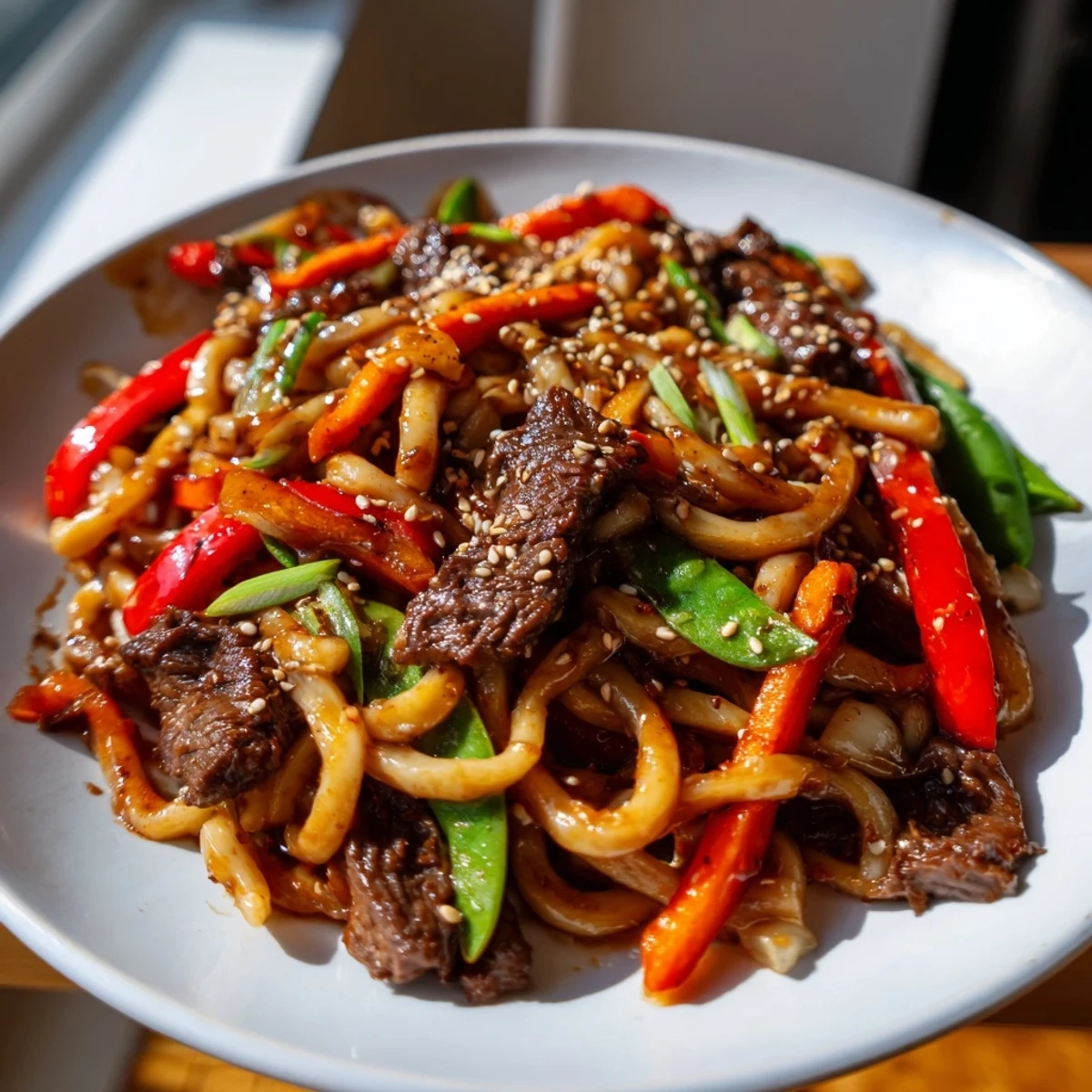
 There's a moment, maybe 30 seconds before serving, when the whole kitchen fills with this smell—savory, spicy, deeply comforting—and you realize you've made something that tastes like intentionality. That's when the dish stops being just dinner.
Getting Your Beef Right
The cornstarch coating seems small, but it's actually doing heavy lifting—it creates a tiny barrier that lets the beef brown without overcooking inside. Some people skip it, and their beef turns gray and sad instead of golden and tender. Don't be those people.
The Sauce Balance That Actually Works
The sweet and spicy dance in this sauce is deliberate—the mirin and brown sugar aren't there to make it dessert-like, they're there to cool down the sriracha just enough so you keep eating instead of reaching for water. The oyster sauce adds a savory depth that you might not taste directly but would absolutely miss if it disappeared.
Variations and Thoughts
Swap the beef for shrimp if you want it lighter, or tofu if you're going vegetarian—just remember that shrimp cooks faster so don't leave it in the wok as long. Some nights I throw in snap peas or baby corn if that's what's in my fridge. The beauty of stir fry is that it forgives small changes as long as you keep the technique tight.
- Add a handful of fresh cilantro right before serving if you want an herbal brightness that cuts through the richness.
- Serve alongside steamed jasmine rice if you want to stretch it to more people or if you're hungry enough for that.
- Leftovers can live in the fridge for a day or two, though the noodles absorb more sauce and get slightly softer, which some people actually prefer.
 Save to Pinterest
 This is the kind of food that disappears fast and leaves everyone asking when you're making it again. Keep it in rotation.
Recipe FAQs
- → What cut of beef works best here?
-
Thinly sliced sirloin or flank steak is ideal for quick cooking and tenderness.
- → Can I substitute udon noodles?
-
Thick wheat noodles or even rice noodles can be used, but udon adds a unique chewy texture.
- → How do I control the spiciness level?
-
Adjust the amount of sriracha or chili garlic sauce to suit your preferred heat level.
- → What vegetables can I add or swap?
-
Snap peas and bell peppers work well, but carrots, bean sprouts, or broccoli are great alternatives.
- → How do I ensure the beef stays tender?
-
Marinating with soy sauce, sesame oil, and cornstarch helps tenderize; sear quickly on high heat.