
 Save to Pinterest
 These artisanal bagels combine the tangy complexity of naturally fermented sourdough with the rich sweetness of slowly caramelized onions. The overnight fermentation develops deep flavor while creating that signature chewy texture bagel lovers crave.
The process begins with preparing sweet, golden onions that cook down until deeply browned and concentrated. Meanwhile, the dough gets a long, slow rise allowing the sourdough to work its magic. Before baking, each bagel takes a quick dip in malt-sweetened water, creating that glossy, chewy exterior.
The result is a professional-quality bagel with a substantial crust, tender interior, and savory-sweet onion flavor throughout. Perfect toasted with cream cheese or enjoyed plain, these freeze beautifully for grab-and-go breakfasts all week long.
The smell of caramelizing onions has this way of taking over an entire apartment, settling into every corner like a cozy promise. I started making these sourdough bagels on a rainy Saturday when my starter was particularly bubbly and restless, demanding to be used for something more substantial than my usual loaf. Something about the combination of tangy fermented dough and sweet, slow-cooked onions felt right, like they were always meant to share the same baking sheet.
My roommate walked in while the onions were sizzling away, actually asking if I was making French soup for dinner. The look on her face when I explained they were destined for bagel topping was half confusion, half intrigue. By the time the first batch came out of the oven, golden and smelling like heaven itself, she understood completely.
Ingredients
- Active sourdough starter: Use your starter at peak activity, ideally 4 to 6 hours after feeding for the best rise and flavor
- Bread flour: Higher protein content creates that signature chewy bagel texture we all love
- Whole wheat flour: Adds subtle nuttiness and helps the fermentation process along
- Warm water: Should feel pleasantly warm to your touch, around 80°F to wake up the starter
- Honey: Feeds the yeast and adds just enough sweetness to balance the sourdough tang
- Fine sea salt: Fine dissolves evenly into the dough, coarse would interrupt the smooth texture
- Large yellow onion: Yellow onions sweeten beautifully as they caramelize, red would be too sharp
- Olive oil: Helps the onions cook evenly without burning
- Barley malt syrup: The secret to professional bagel shine, honey works as a substitute
Instructions
- Caramelize the onions first:
- Heat olive oil in a skillet over medium low heat, add sliced onions and salt, then let them cook slowly while stirring occasionally until they turn deep brown and sweet, about 20 to 25 minutes. Set them aside to cool completely, otherwise they will cook too quickly on the bagels.
- Mix your dough base:
- Combine starter, warm water, and honey in a large bowl until dissolved, then add both flours and salt, mixing until you have a rough, shaggy dough that comes together.
- Knead until smooth:
- Turn onto a floured surface and knead for 8 to 10 minutes until the dough feels smooth, elastic, and pushes back when you press it.
- First fermentation:
- Place in an oiled bowl, cover, and let rest at room temperature for 4 to 6 hours until noticeably larger and full of air.
- Shape into bagels:
- Divide dough into 8 equal pieces, roll each into a tight ball, then poke a hole through the center with your finger and gently stretch it to form a 2 inch opening.
- Cold proof overnight:
- Arrange on parchment paper, cover loosely, proof for 1 hour at room temperature, then refrigerate for 8 to 12 hours while the flavor develops.
- Prepare the water bath:
- Preheat your oven to 425°F and bring 2 liters of water to a gentle boil with barley malt syrup or honey.
- Boil for chewiness:
- Carefully lower each bagel into the boiling water and cook for 45 seconds per side, just until they puff slightly.
- Add the onion topping:
- Return boiled bagels to the baking sheet and press caramelized onions onto the tops while they are still wet.
- Bake until golden:
- Bake for 20 to 25 minutes until deeply golden with a crisp crust, then cool completely on a wire rack.
 Save to Pinterest
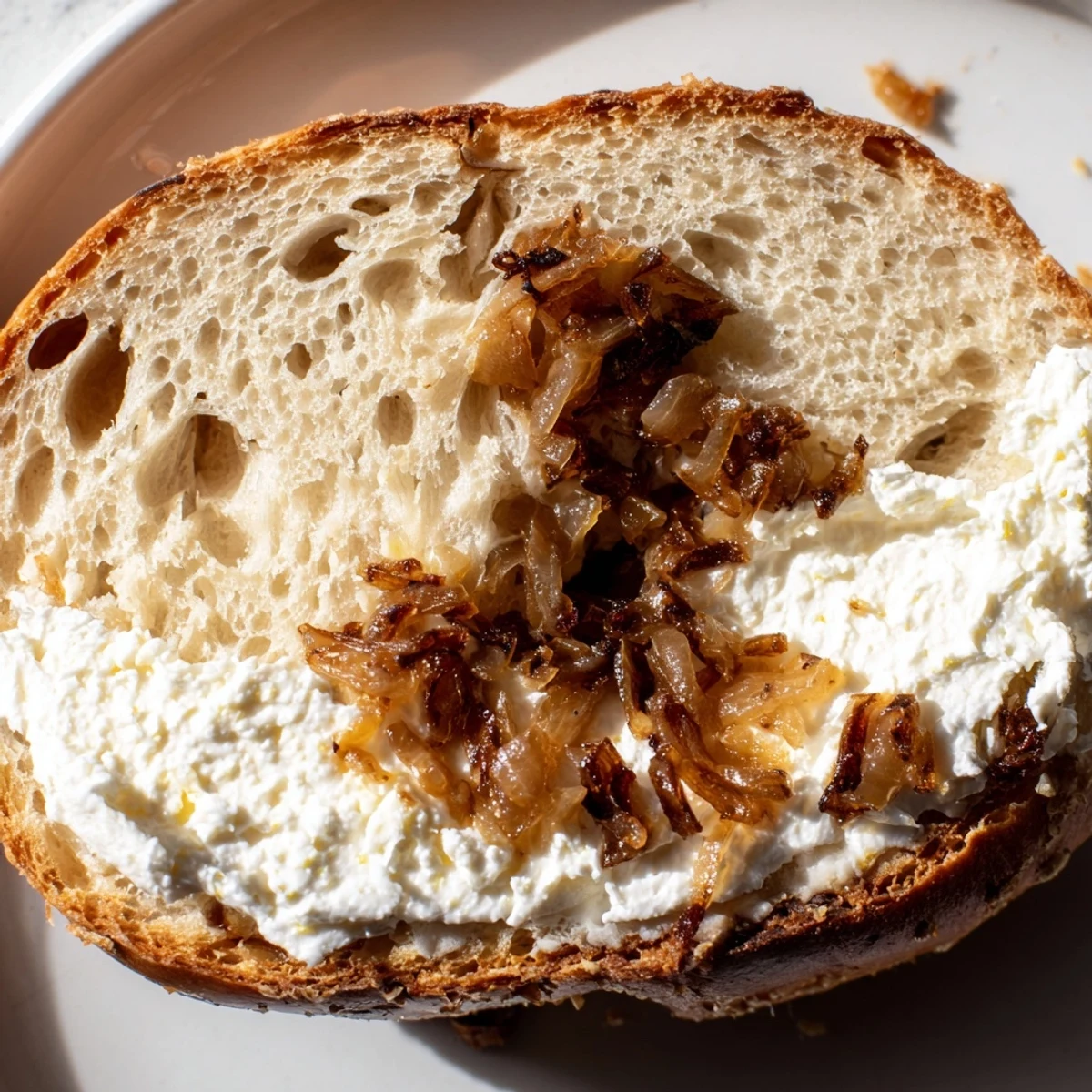
 These became my go to for weekend brunch gatherings after the first time I served them warm with plain cream cheese. Friends who swore they were not morning people somehow found themselves at my kitchen table, bagel in hand, asking when the next batch would be ready.
Mastering The Shaping Process
The hole might seem too large when you are shaping, but remember it will shrink during proofing and boiling. I have learned the hard way that a small hole disappears completely, leaving you with excellent onion buns but something that is definitely not a bagel.
Freezing For Later
Once cooled, slice these bagels in half and freeze them in layers separated by parchment paper. They toast up beautifully from frozen, which means you can have fresh bagel breakfast even on chaotic weekdays when baking from scratch is impossible.
Serving Suggestions
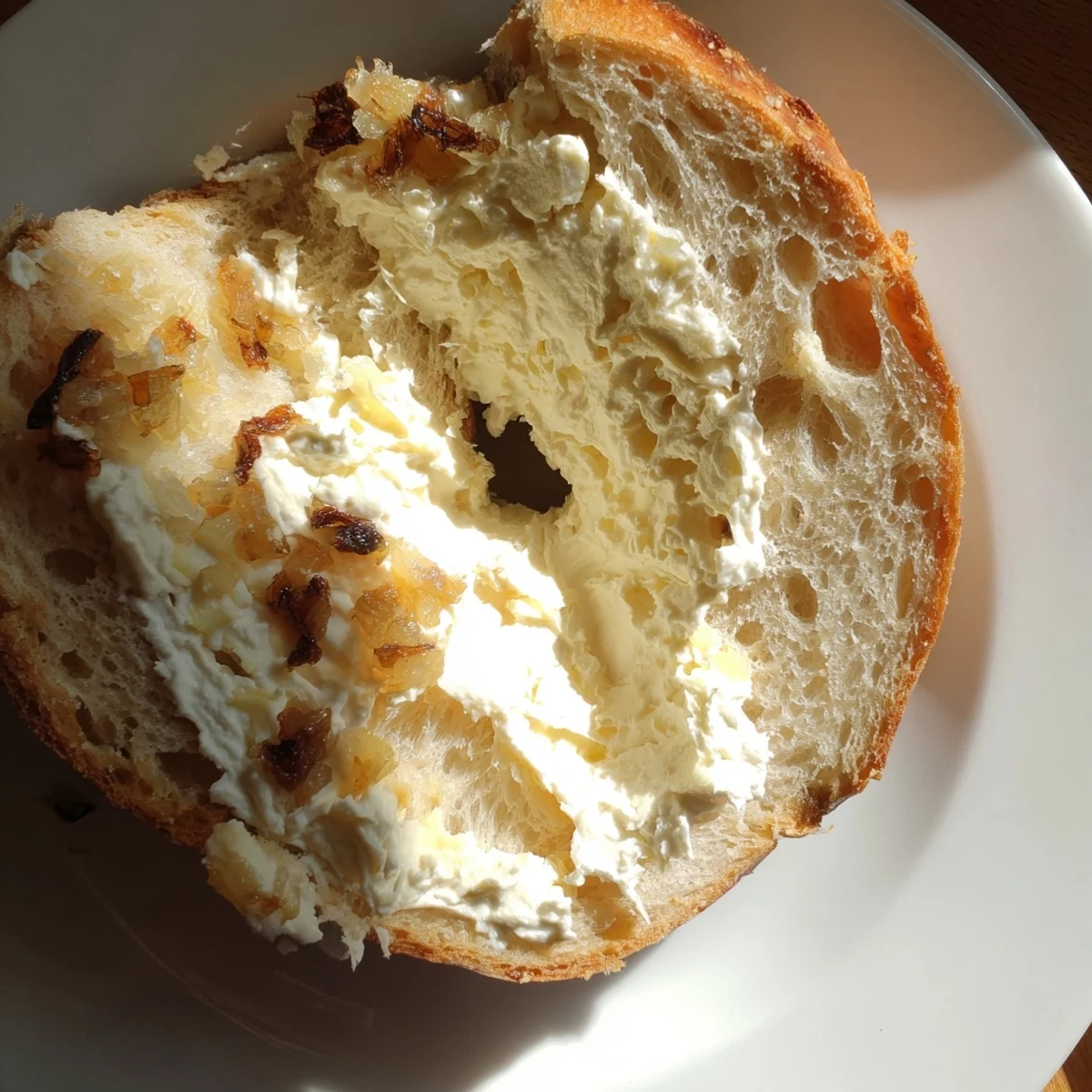
These onion bagels deserve better than to be hidden under heavy toppings. A simple schmear of plain cream cheese or perhaps a little butter while they are still warm from the oven lets the caramelized onion flavor truly shine through.
- Try them with herbed cream cheese and fresh chives
- Pile high with sliced avocado and a soft egg
- Simply toast and eat plain to appreciate the crust
 Save to Pinterest
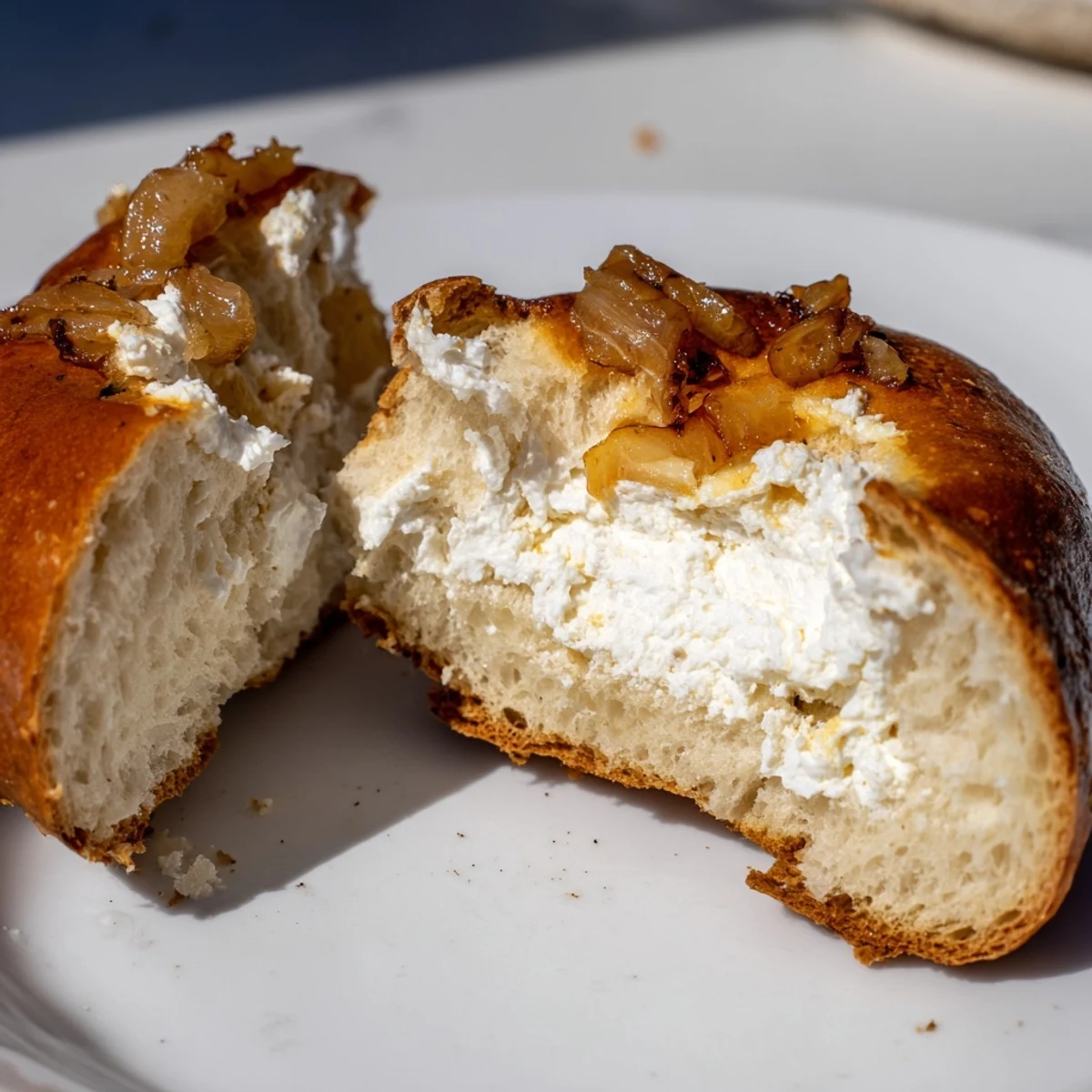
 There is something deeply satisfying about pulling a tray of these from the oven, the onions caramelized to perfection, the kitchen filled with that unmistakable sourdough warmth. Happy baking, friend.
Recipe FAQs
- → Why do these bagels require overnight proofing?
-
The overnight refrigeration allows the sourdough to slowly ferment, developing deeper flavor while making the bagels easier to handle. Cold fermentation also improves texture, creating that characteristic chewy crust and tender interior bakery bagels are known for.
- → Can I use active dry yeast instead of sourdough starter?
-
Yes, substitute 2 teaspoons instant yeast for the sourdough starter and reduce the initial fermentation time to 1-2 hours until doubled. You'll miss the tangy sourdough complexity, but the texture will remain similar.
- → What's the purpose of boiling bagels before baking?
-
Boiling gelatinizes the surface starch, creating that shiny, chewy exterior bagel lovers expect. The malt syrup or honey adds subtle sweetness and helps the crust achieve the perfect golden-brown color during baking.
- → How do I store these bagels for maximum freshness?
-
Keep at room temperature in a paper bag for up to 2 days. For longer storage, slice and freeze in airtight bags for up to 1 month. Toast frozen slices directly—no thawing needed—for that fresh-baked taste.
- → Can I prepare the onion topping in advance?
-
Absolutely. Caramelize onions up to 5 days ahead and refrigerate in an airtight container. The flavor actually improves over time, making this an excellent make-ahead component for your morning baking.
- → What if I don't have barley malt syrup?
-
Honey, brown sugar, or maple syrup work perfectly as substitutes. Each adds slightly different flavor notes—honey is floral, brown sugar adds molasses depth, while maple syrup provides subtle woodiness.